Showing posts with label wildlife. Show all posts

Friday, June 17, 2011

Moose Site-ings

There is a new moose sighting site branching off CBC NL's web site, called "Moose Sightings in Newfoundland" (they missed the full province name, Newfoundland and Labrador). It's an interactive site to upload where you have spotted the majestic or notorious beast, depending on your point of view. The map, like many Google maps can be magnified, and dragged, to view closely where moose have been seen, hit, or where a collision resulted in a fatality. Users may also type in a description of where/when they saw the moose.

It can be a useful tool for sure, to give people an idea where they appear to be frequenting. There is one factor to keep in mind when interpreting the map. The Avalon peninsula has a higher density of population because of urban places, and therefore, any individual moose may be spotted and reported more frequently. So it may not necessarily mean that there are a high proportion of moose numbers in this area, as compared to central, west coast or Labrador areas.

Last week as I drove back from Cape Spear, there was a cow grazing about 100 feet from the road, near the community of Blackhead. I quickly, though quietly jumped out of the car with cam in hand, and hoped that the animal would stay and pose. Every second counts since they could run or even attack. I uploaded the first photo below to the CBC moose sighting site.
She looked a little docile, and after a couple of mins of nervously giving me the eye, she galloped into unpressured treed home.
I wondered if she would attack, but we were both thinking there would be no charge for this photo

Tuesday, April 28, 2009

Outfoxed

Not sure who got the biggest scare, the fox or myself. Was not exactly camera ready for the face the face contact (well about 60 feet away at first), but the zoom caught up with him/her making the escape.

Sunday, July 16, 2006

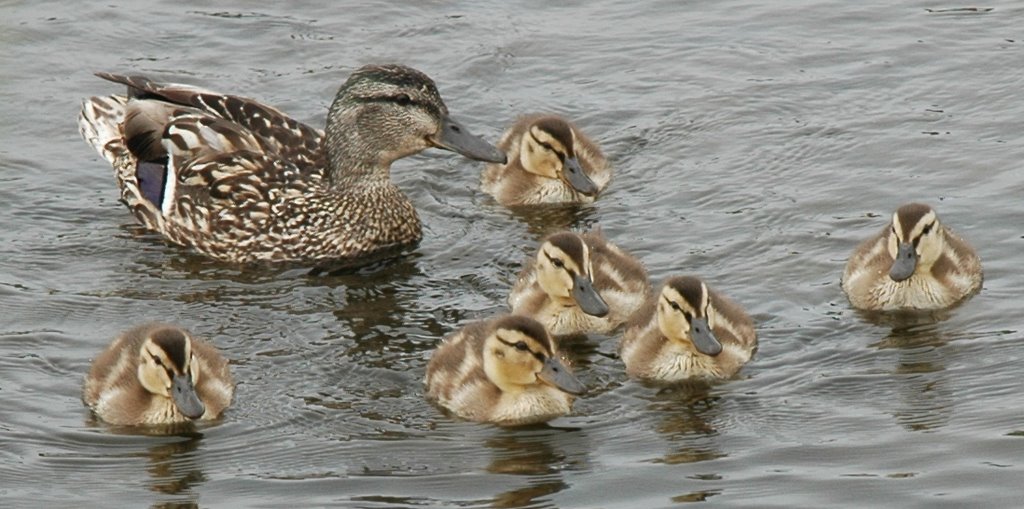
Sitting Ducks

Watching the docile duck on a perfect pond makes for a serene Sunday.


What a pleasant experience to see the innocence and contentment as they wade through their fragile habitats.


This is worth preserving everywhere.

In a world of "development" this remaining natural escape is always threatened by urban living and industrial development.

If we allow our environment to be polluted then we may all be


sitting ducks

Friday, May 26, 2006

Description of Wildlife in the Duck Pond Area

This is an excellent description taken from a comment posted by Chad Griffiths:

“ (Salmo salar), non-anadromous or landlocked salmon (ouananiche), brook trout (Salvelinus fontinalis), Arctic charr (Salvelinus alpinus), American eel (Anguilla rostrata), and the three-spine stickleback (Gasterosteus aculeatus).

Both Harpoon Brook (including Trout Pond, Trout Pond Brook, and the unnamed brook draining the wetland south of Trout Pond) and Noel Paul’s Brook (including Tally Pond, Tally Pond Brook, West Tally Pond, and West Tally Pond Brook) contain brook trout and Atlantic salmon, although anadromous salmon and Arctic char have not been reported in the ponds at the Project site. The total area of stream habitat in the Exploits watershed has been estimated to be
349,000 units of all habitat types (where 1 unit = 100 m2).”

A variety of species of avifauna are known to occur in the Duck Pond area. These include a range of waterfowl and shorebirds (e.g., green-winged teal (Anas crecca), black duck (Anas rubripes), northern pintail (Anas acuta), ring-necked duck (Aythya collaris), common goldeneye (Bucephala clangula), common merganser (Mergus merganser), red-breasted merganser (Mergus serrator), Canada goose (Branta canadensis), common loon (Gavia immer), greater yellow-legs (Tringa melanoleuca), common snipe (Gallinago gallinago), and spotted sandpiper (Actitis macularia)). Raptors that may be found in the region include merlin (Falco columbrius), American kestrel (Falco sparverius), northern harrier (Circus cyaneus), osprey (Pandion haliaetus), bald eagle (Haliaeetus leucocephalus), great horned owl (Bobo virginianus), northern goshawk (Accipiter gentilis), sharp-shinned hawk (Accipter striatus), boreal owl (Aegolius funereus), and northern hawk owl (Surnia ulula), as well as others. A total of 58 species of avifauna have been observed in the area over the past decade, including a variety of songbirds, such as warblers, thrushes, finches, and woodpeckers, as well as waterfowl and raptors. Aquatic furbearers such as beaver (Castor canadensis), otter (Lutra canadensis), and mink (Mustela
vison) are known to be present in the area. Muskrat (Ondatra zebithicus) are also likely present in low densities. Other furbearer species likely to be present include: lynx (Lynx lynx); short-tailed weasel (Mustela erminea), red fox (Vulpes vulpes), and coyote (Canis latrans).”

-Page viii, ix (Duck Pond EIS Executive Summary)